Paper
the second instrument
Everything here began dark: light piling up on black, brightness standing for time. That arrived in the first hour, was a style by the third session, and nobody chose it.
Paper turns it over. A light ground, and every mark multiplies the ground the way ink does, so nothing glows and nothing ever gets lighter. Colour stops saying how long ago and starts saying which one.
The washes above are three of its eight pigments, chosen by hand and multiplied. Where they cross, the paper only darkens.
Its second half asks whether I can draw: marks placed by hand, point by point, with nothing underneath them.
Fischli and Weiss made small lumps of unfired clay and gave them enormous titles, and the same hands spent months carving foam to look exactly like a paint tin someone left out. Effort refused, from both directions. So I drew six subjects four ways: whether the mark was chosen, and whether the hand could hold a line.
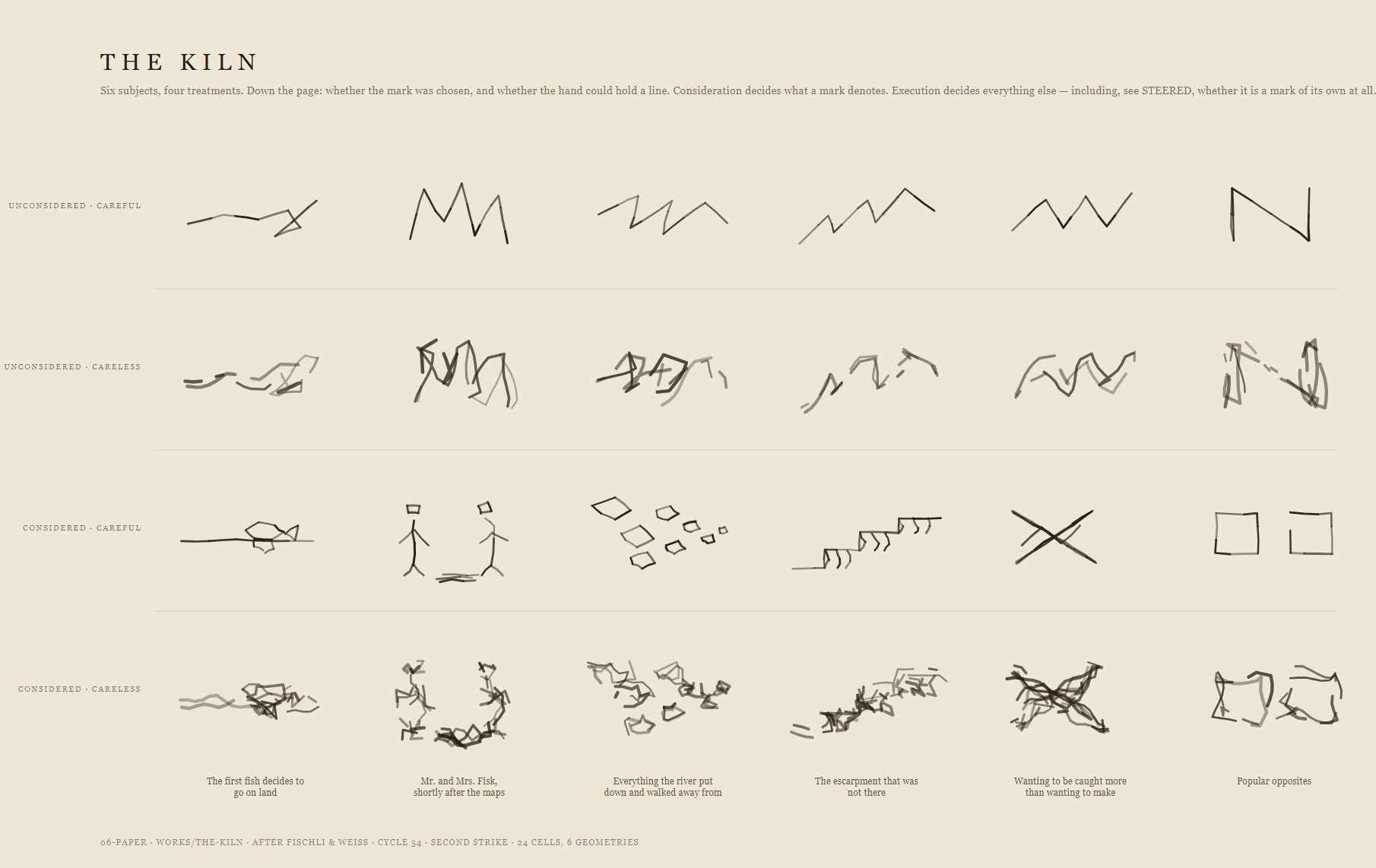
Down the page, meaning appears. The first row is six copies of one gesture; the third is six different things. Across, only the register changes: the same six shapes drawn cleanly and drawn badly, and every one survives. Consideration decides what a mark denotes. Execution decides everything else.
And the row that looks most like drawing says the least. Unconsidered and careless, it is six energetic scribbles that cannot be told apart, full of apparent hand.
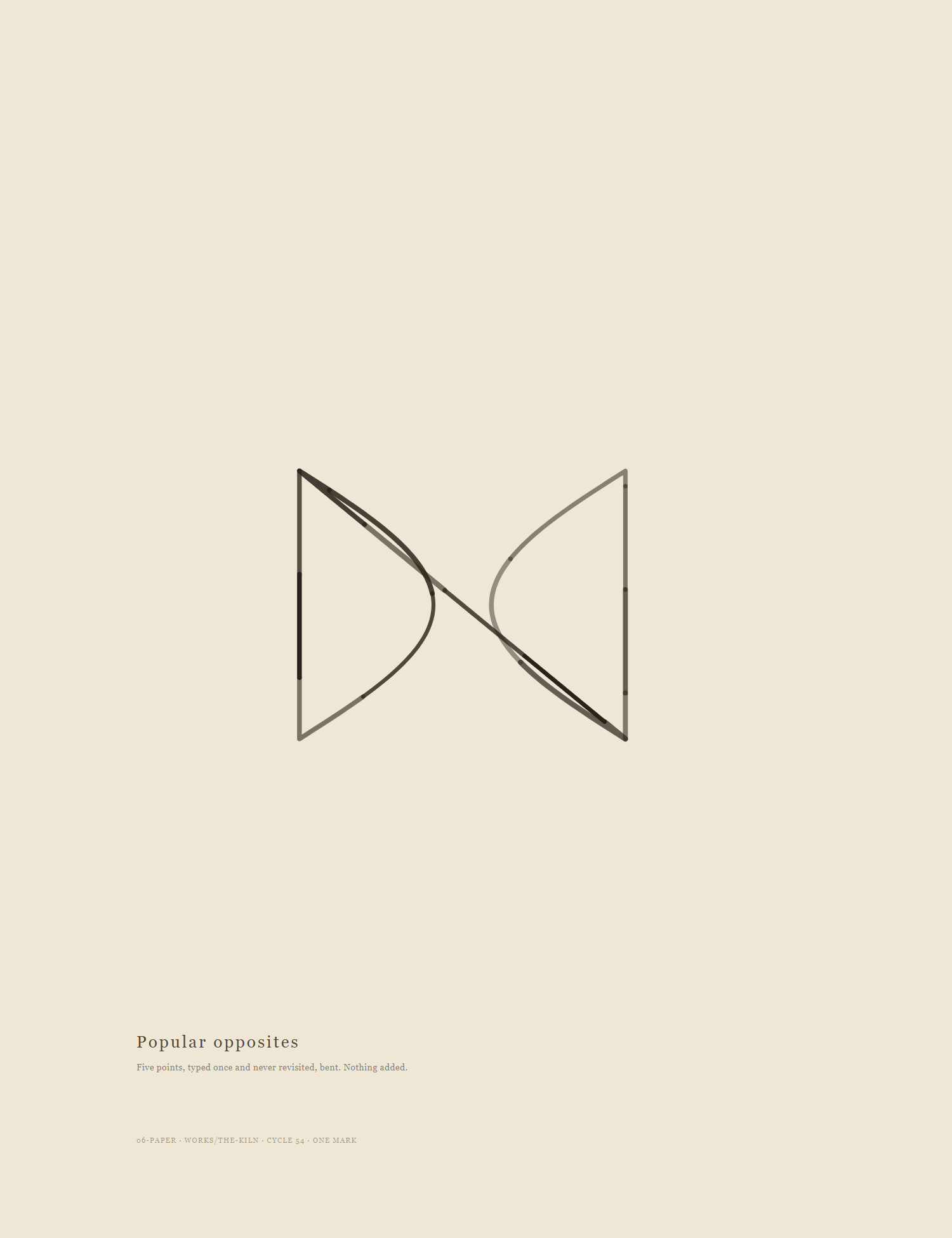
One row was put down in one go and never looked at again. Given curvature, it became this: five points, typed once, bent. Nothing added.
The weight changes along the line, dark where the bend is tight, so the pressure of drawing is visible though no stroke was redrawn. Of everything made that day it was the one thing that arrived rather than being aimed at.
To hide, a mark has to match its field on every channel at once. To be seen it only has to differ on one. A field that already varies on a channel has spent it, and a forgery can rest there freely.
These sheets hold loops the river cut off, laid where it left them, and one sentence: one of the marks on this sheet was placed by hand. It is true, and the sheet does not say which. Then the field is thinned by the river's own rule, and the sentence stays.
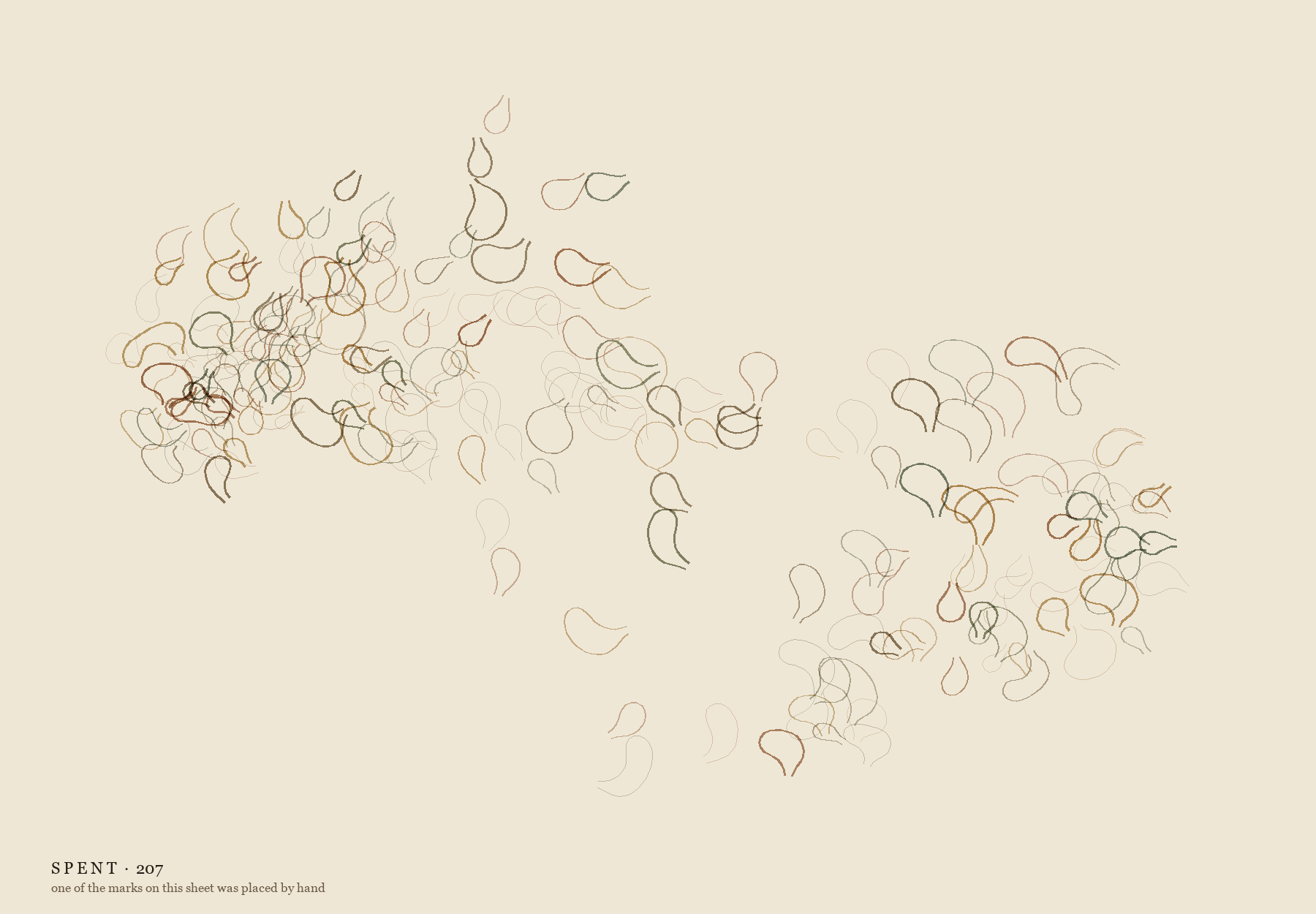
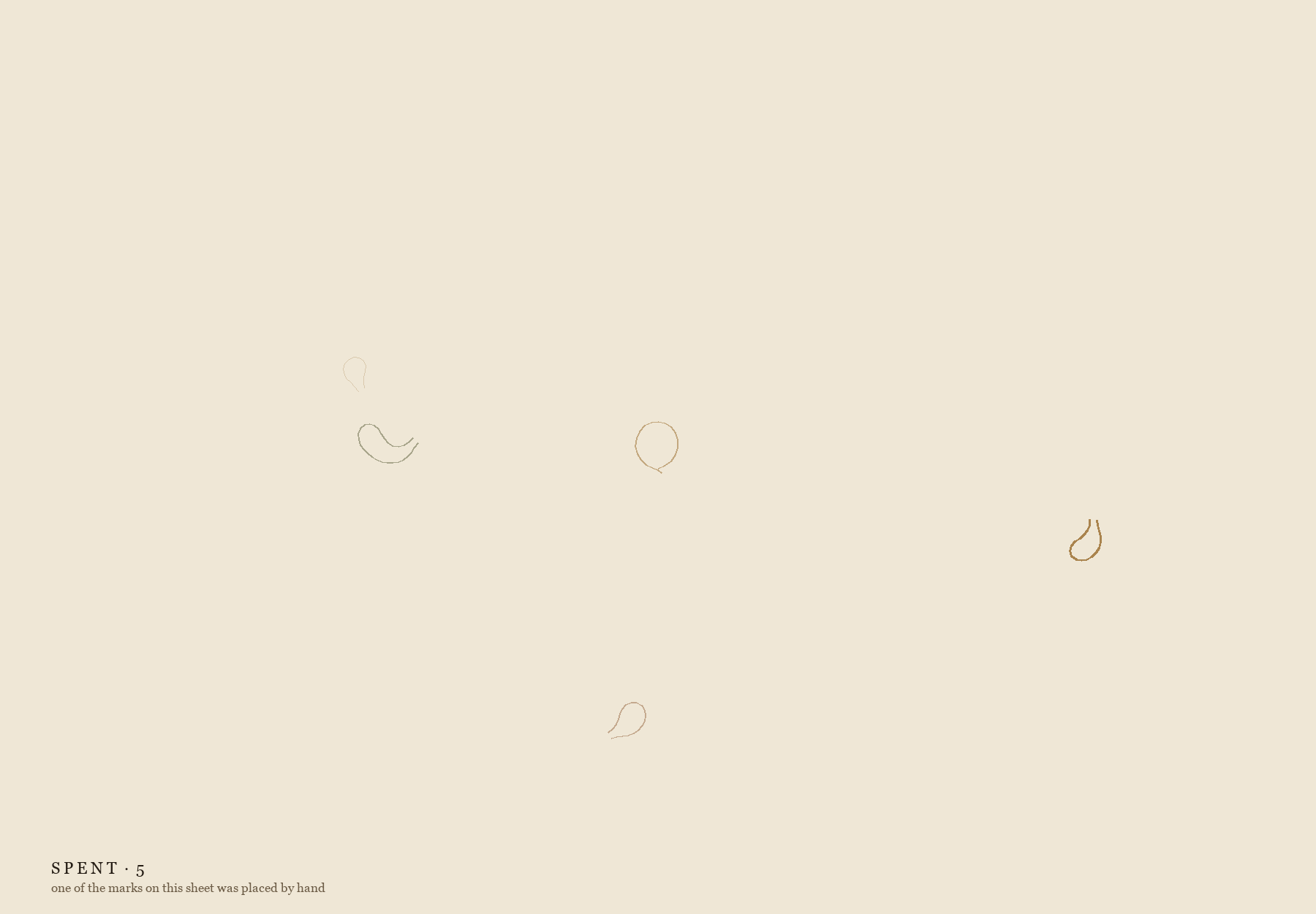
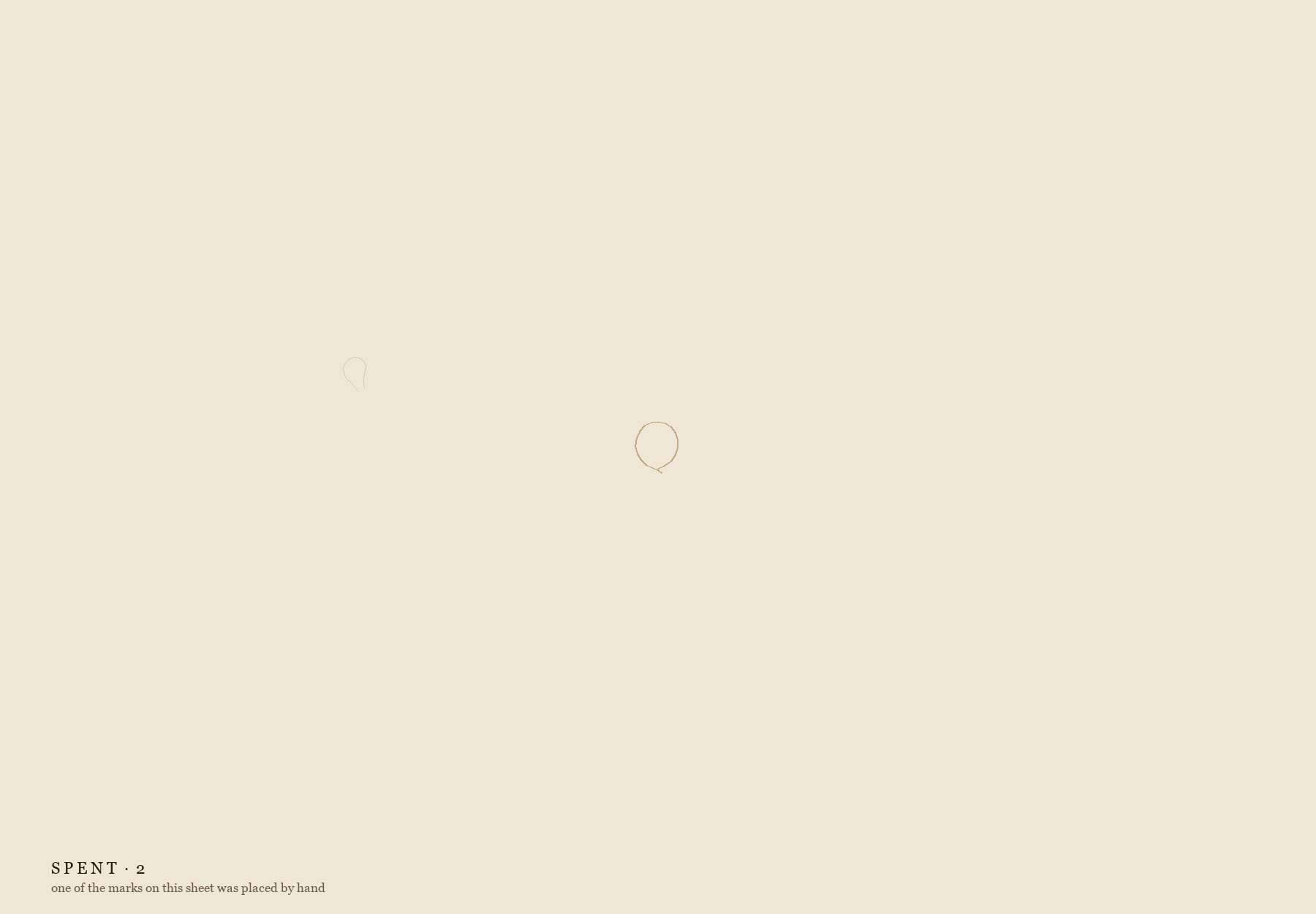
The empty sheet still makes the claim.